Assurea × Runtime Verification: A New Partnership for Medical Device Software Assurance

We’re excited to announce a new partnership between Assurea and Runtime Verification! As software becomes increasingly critical to medical devices, SaMD, and artificial organs, companies need stronger ways to demonstrate that their software is safe, reliable, and ready for use in a regulated environment. This partnership brings together two complementary strengths. Runtime Verification brings deep
Read More

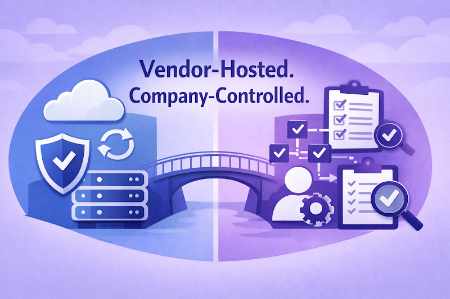
SaaS and Cloud Validation in Life Sciences: What Makes It Different and What Inspectors Really Ask

SaaS and cloud validation is different because the regulated company no longer controls the full technical stack, but it still owns intended use, oversight, data integrity, access, and compliance. That is where many teams misunderstand the real validation challenge. When a system is vendor-hosted, the validation work does not go away. It shifts. Instead of

Read More

Contract & SLA Checklist for SaaS and AI Vendors in Pharma GxP Environments

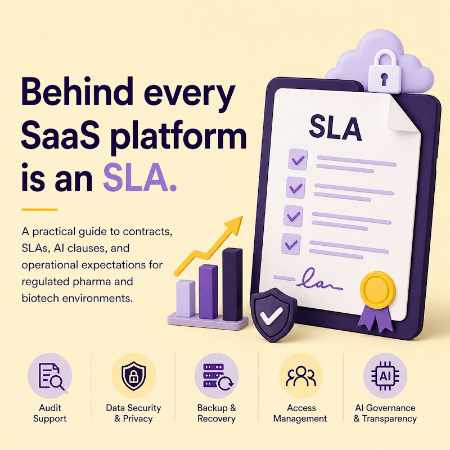
Pharma companies cannot rely on standard commercial SaaS contracts alone when regulated systems, GxP data, or AI-enabled workflows are involved. In regulated environments, contracts and SLAs help define operational oversight expectations that support validation, data integrity, cybersecurity, supplier governance, and inspection readiness. Most commercial agreements are designed around uptime and commercial liability. Pharma and biotech

Read More
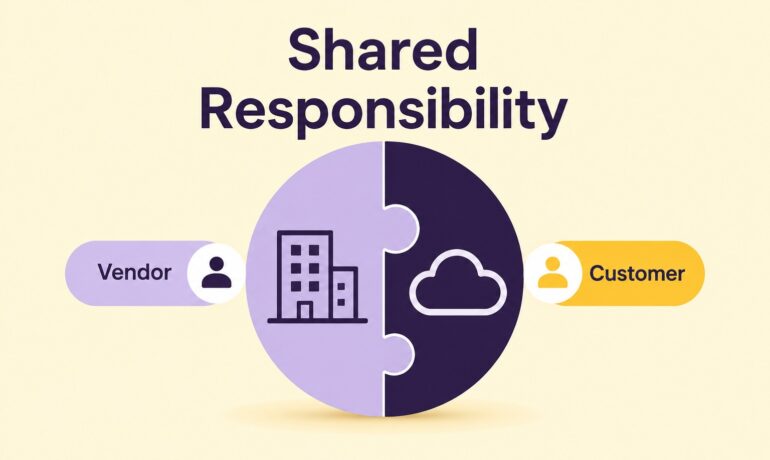
Shared responsibility between vendor and regulated company in SaaS validation

Who Owns What in SaaS Validation? Vendor vs Regulated Company Responsibilities

Many life sciences organizations commonly ask this question when implementing a SaaS platform: “If the vendor already validated the system, what do we still need to do?” The answer is straightforward. The vendor is responsible for the platform it develops, operates, and maintains. The regulated company remains responsible for how that platform is configured, governed,

Read More
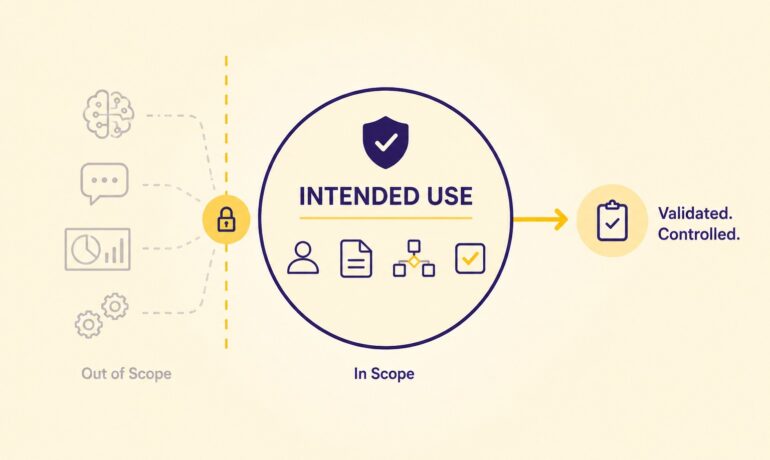
Defining intended use for AI and SaaS tools in pharma

How to Define Intended Use for AI and SaaS Tools in Pharma

Defining intended use is one of the most important steps in validating AI and SaaS tools in regulated pharma and biotech environments. The intended use statement establishes validation scope, testing strategy, risk classification, supplier oversight expectations, and procedural controls. For AI systems, this is often more difficult than traditional software because operational usage can evolve

Read More
Evaluating a GxP software vendor for biotech compliance

Considerations for Biotech Companies Evaluating GxP Software Providers

As biotech companies scale, user-friendly software systems—like EQMS, LIMS, or MES— can help standardize operations, ensure data integrity, and support regulatory compliance. But before signing a contract, it’s critical to better understand what the system can do and how it’s built, maintained, and supported behind the scenes. So, how do you dive into what really

Read More

Navigating Quality Agreements: Key Considerations for Pharma Suppliers

Quality agreements are vital documents that outline the roles, responsibilities, and expectations between a company and its suppliers. For pharmaceutical companies, ensuring quality throughout the supply chain is crucial for compliance with regulatory requirements and maintaining product integrity. Here are key considerations to include in a quality agreement for suppliers. Introduction/Purpose/Scope 1. Parties to the

Read More

Aligning SDLC Processes with GAMP® 5: A Roadmap for Software Providers

In software development for regulated industries, ensuring compliance with regulations such as 21 CFR Part 11 and EU Annex 11 requires a systematic and structured approach. In this blog, we explore how adhering to the principles of ISPE GAMP® 5, can guide software providers in aligning their activities to ensure compliance. In this blog, let’s

Read More

Supplier Management Program for a Clinical Biotech Startup

As a clinical startup, establishing a supplier management program and managing supplier relationships is critical to ensuring the quality, safety, and efficacy of clinical products and therapies. A supplier management program defines the standards to evaluate, qualify, monitor, and requalify a company’s suppliers. This program is a holistic approach to ensuring your suppliers meet regulatory

Read More