

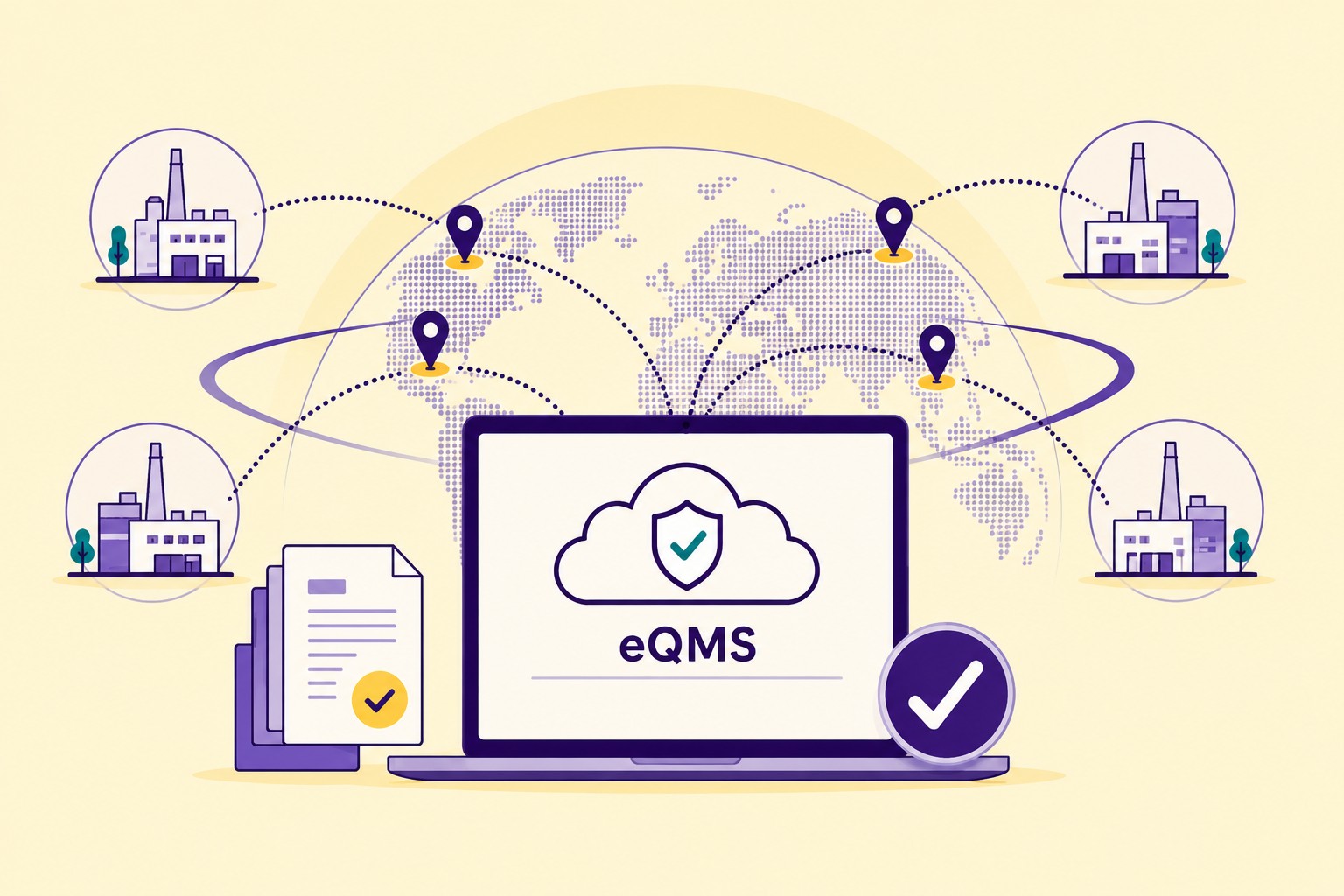
How Assurea validated a U.S. deployment of Veeva Vault Quality and established a reusable validation framework for future global site rollouts.
Project Overview
When a global Contract Development and Manufacturing Organization (CDMO) selected Veeva Vault Quality to standardize its quality management processes, the first deployment was planned for a U.S. manufacturing site located on the West Coast of the US. Rather than treating the project as a one-time validation effort, the client wanted to establish a validation package that could support future deployments across additional global sites while maintaining a consistent validation approach.
Assurea was engaged to provide CSV support for the implementation of Veeva Vault QualityDocs and Veeva Vault QMS. Our role focused on validation—from defining the validation strategy through protocol authoring, test execution, and final validation documentation.
By combining supplier-provided validation evidence with client-specific testing through a structured wrapper protocol, Assurea helped create a validation package that could be reused as a foundation for subsequent site deployments.
About the Platform
Platform: Veeva Vault Quality
Modules in Scope
- Veeva Vault QualityDocs
- Veeva Vault QMS
Industry
Global Contract Development and Manufacturing Organization (CDMO)
Project Duration
6 Months
Deployment Strategy
Phase 1 – Initial U.S. Manufacturing Site
Future rollout planned across additional global manufacturing locations.
The Business Challenge
The client was moving toward a standardized cloud-based Electronic Quality Management System (eQMS) to support quality operations across its global manufacturing network.
Because the rollout would eventually extend beyond the initial U.S. site, the client wanted more than a completed validation package. They wanted a validation approach that could be repeated as additional facilities adopted the platform.
This meant balancing two objectives:
- Demonstrating that the first deployment met the client’s intended GxP use.
- Building validation documentation that could serve as a reference for future global deployments without recreating the entire validation lifecycle at every site.
Assurea’s Validation Approach
Rather than recreating supplier testing, Assurea developed a wrapper protocol designed to connect supplier validation evidence with the client’s own business processes, intended use, and regulatory requirements.
The wrapper protocol documented:
- Which supplier-provided validation evidence could be leveraged.
- How that evidence aligned with the client’s approved User Requirements Specification (URS).
- Which requirements required additional client-specific verification.
- The rationale for additional testing based on business risk and intended use.
This approach allowed the client to take advantage of existing supplier documentation while maintaining ownership of the validation package and demonstrating that the configured system was fit for its intended GxP use.
The validation lifecycle followed a traditional CSV methodology while applying a risk-based approach consistent with current industry expectations for cloud-based systems.
Project Phases
Validation Planning
The project began with a review of the client’s quality processes, User Requirements Specification (URS), and supplier documentation.
During this phase Assurea:
- Reviewed the intended use of QualityDocs and QMS.
- Evaluated supplier validation documentation.
- Defined the validation strategy.
- Performed the initial risk assessment.
- Established the validation deliverables.
Because the platform was being deployed as Software as a Service (SaaS), understanding where supplier responsibilities ended and where client responsibilities began was a critical part of planning.
Wrapper Protocol Development
Once the validation strategy was approved, Assurea developed the wrapper protocol.
Instead of duplicating supplier testing, the wrapper protocol documented how supplier evidence could be leveraged while identifying the testing required to demonstrate compliance with the client’s approved business processes.
The protocol linked supplier documentation back to:
- User Requirements
- Intended Use
- Risk Assessment
- Site-specific configuration
This ensured that every validation activity remained traceable back to documented business requirements.
Developing a structured wrapper protocol created a clear connection between supplier testing and the client’s own intended use, business processes, and regulatory responsibilities.
For cloud applications such as Veeva Vault Quality, this provides a practical way to leverage supplier documentation while maintaining ownership of the validation package and ensuring that client-specific requirements are fully addressed.
Validation Execution
During execution, Assurea performed validation activities for both Veeva Vault QualityDocs and Veeva Vault QMS.
Testing focused on confirming that the configured system supported the client’s approved quality processes, including document management, electronic approvals, controlled document workflows, deviations, CAPAs, change controls, and other configured quality events.
Validation activities included:
- Execution of the wrapper protocol
- Requirements Traceability Matrix (RTM)
- Configuration verification
- Functional testing
- Operational Qualification (OQ)
- Review of electronic records and electronic signatures
- Verification of configured workflows against approved business requirements
Throughout execution, supplier documentation was leveraged where appropriate, while client-specific functionality was verified through additional testing documented within the wrapper protocol.
Validation Completion
The final phase focused on completing the validation package and preparing the system for production use.
Deliverables included:
- Completed protocol execution
- Requirements traceability
- Validation Summary Report
- Final quality review
- Validation package approval
The completed validation package demonstrated that the configured solution supported the client’s intended use and satisfied the approved validation strategy.
Preparing for Global Rollout
Although the project focused on the initial U.S. deployment, scalability was considered throughout the validation lifecycle.
The completed validation package was designed to become the reference package for future site deployments.
Rather than restarting validation from the beginning, subsequent CSV teams could evaluate each site’s configuration against the validated baseline.
For future deployments, this typically involves assessing whether changes such as the ones listed below introduce additional validation requirements:
- approval workflows
- organizational structure
- user roles
- document types
- metadata
- lifecycle states
- security permissions
- local quality procedures
- reporting requirements
Where configuration remained consistent with the validated baseline, existing validation evidence could be leveraged.
Where differences affected intended use or business requirements, additional site-specific testing could be performed while maintaining consistency with the original validation strategy.
This approach supports a repeatable validation methodology while recognizing that every manufacturing site has unique operational requirements.
Looking Ahead
As more life sciences organizations move toward global cloud platforms, validation is no longer just about demonstrating compliance for a single deployment. It is about creating validation frameworks that can support future growth while maintaining consistency across multiple manufacturing sites.
By developing a reusable validation approach for the client’s first Veeva Vault Quality deployment, Assurea helped establish a foundation that could be leveraged as additional sites adopted the platform.
Disclaimer: Assurea is an independent consulting firm and is not affiliated with, partnered with, endorsed by, or sponsored by Veeva Systems. References to Veeva products are used solely to describe the technology platform involved in our client engagement.